

The Maalinyai School I Patna
Carving Out the Void: Where the OAT is the Heart, Not an Afterthought.
Client
Tarunai Trust for Educational and Societal Development
Location
Patna
Plot Area
1.45 Acres
B.U.A.
8900 Sqmt
Duration
2018-2024
Tarunai Trust for Educational and Societal Development
Location
Patna
Plot Area
1.45 Acres
B.U.A.
8900 Sqmt
Duration
2018-2024
The Maalinyai School, Patna
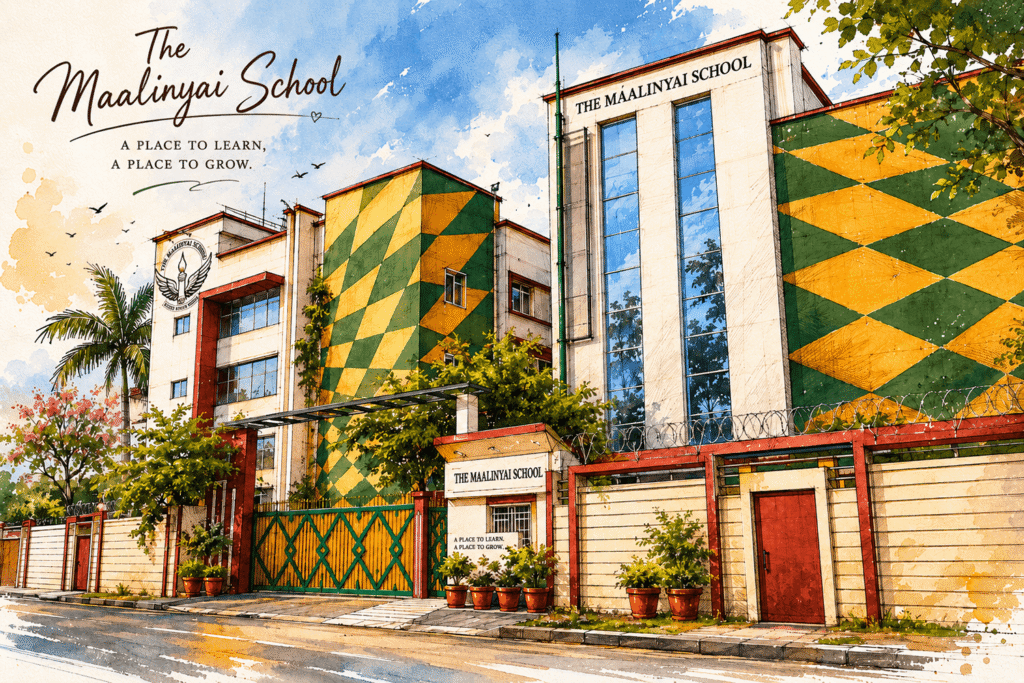
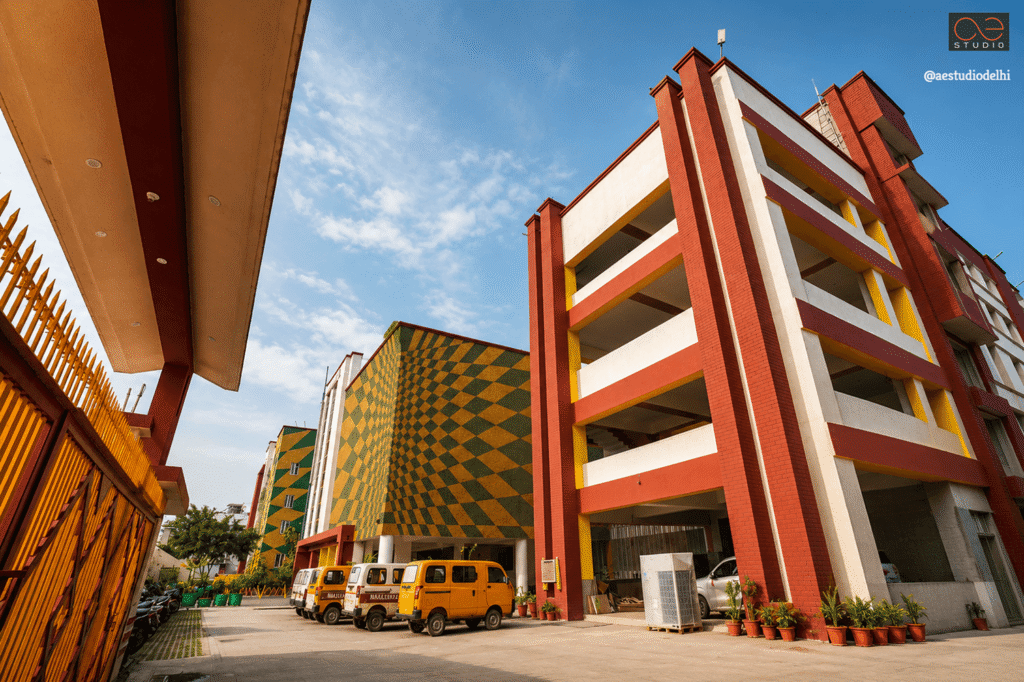
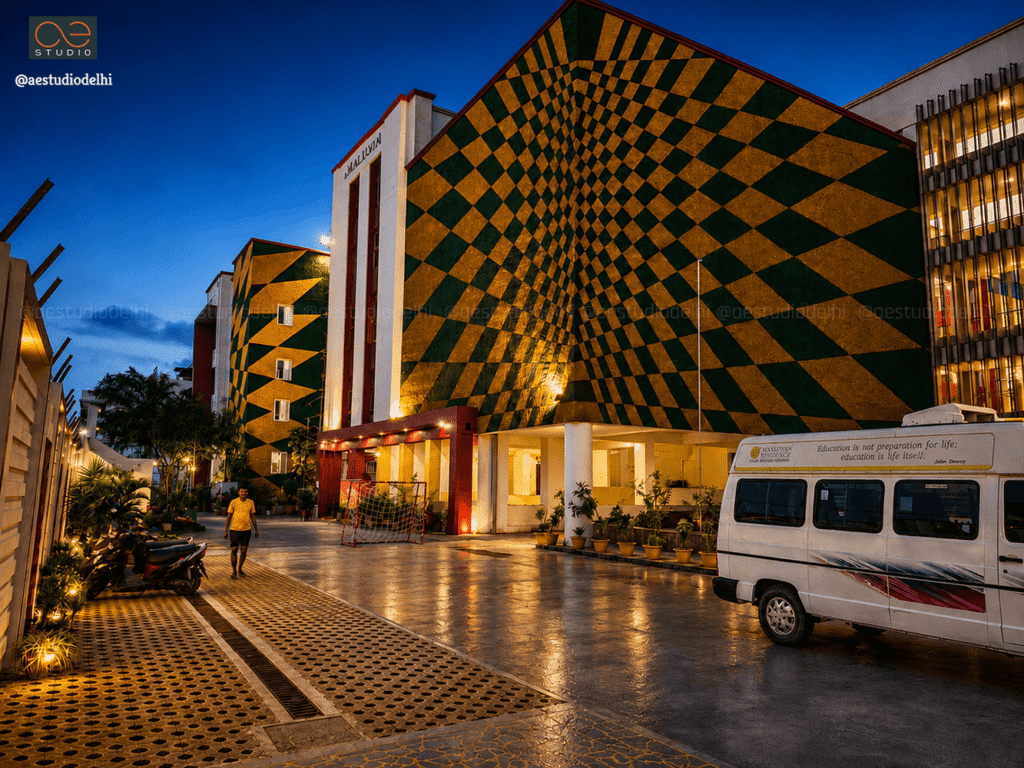
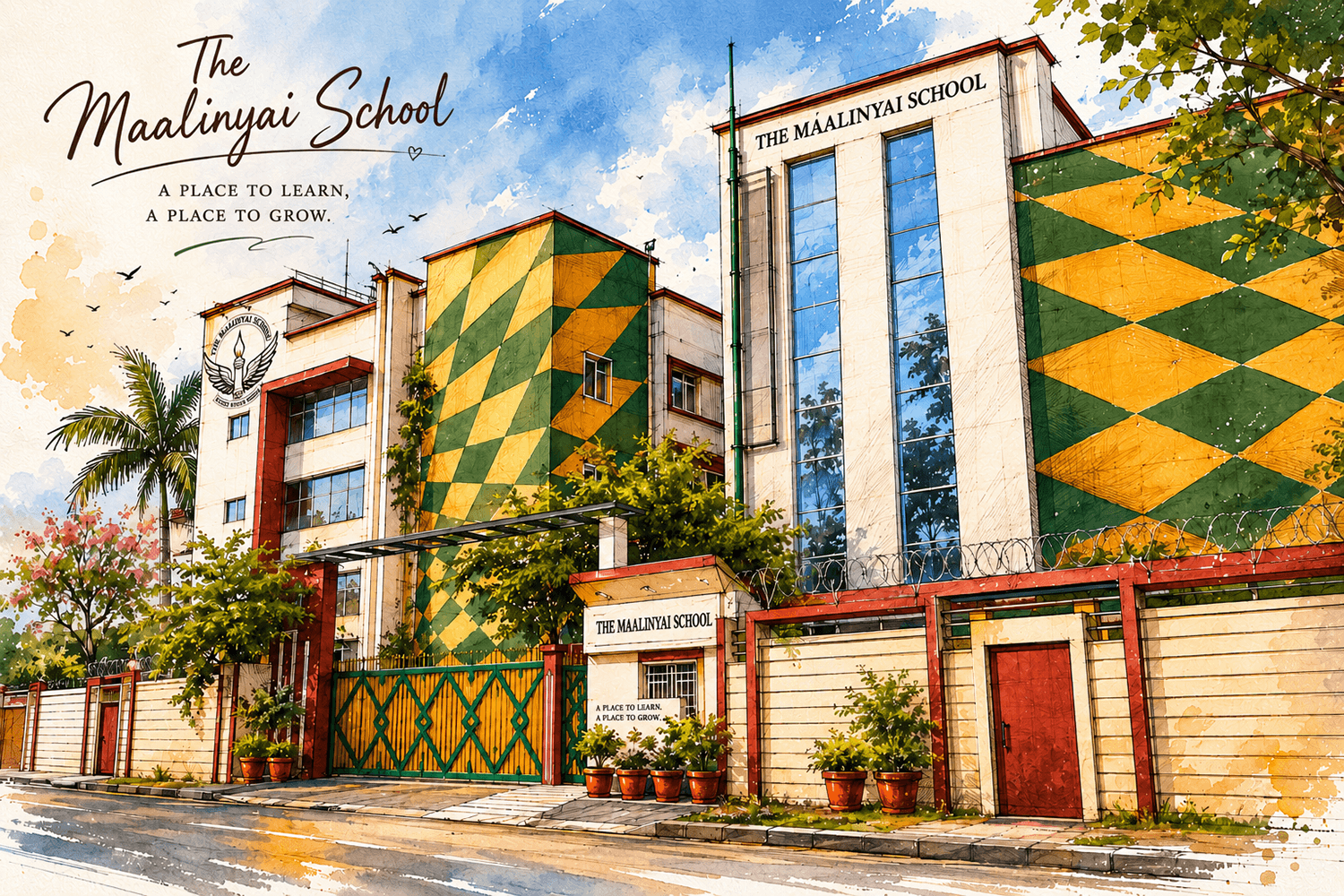
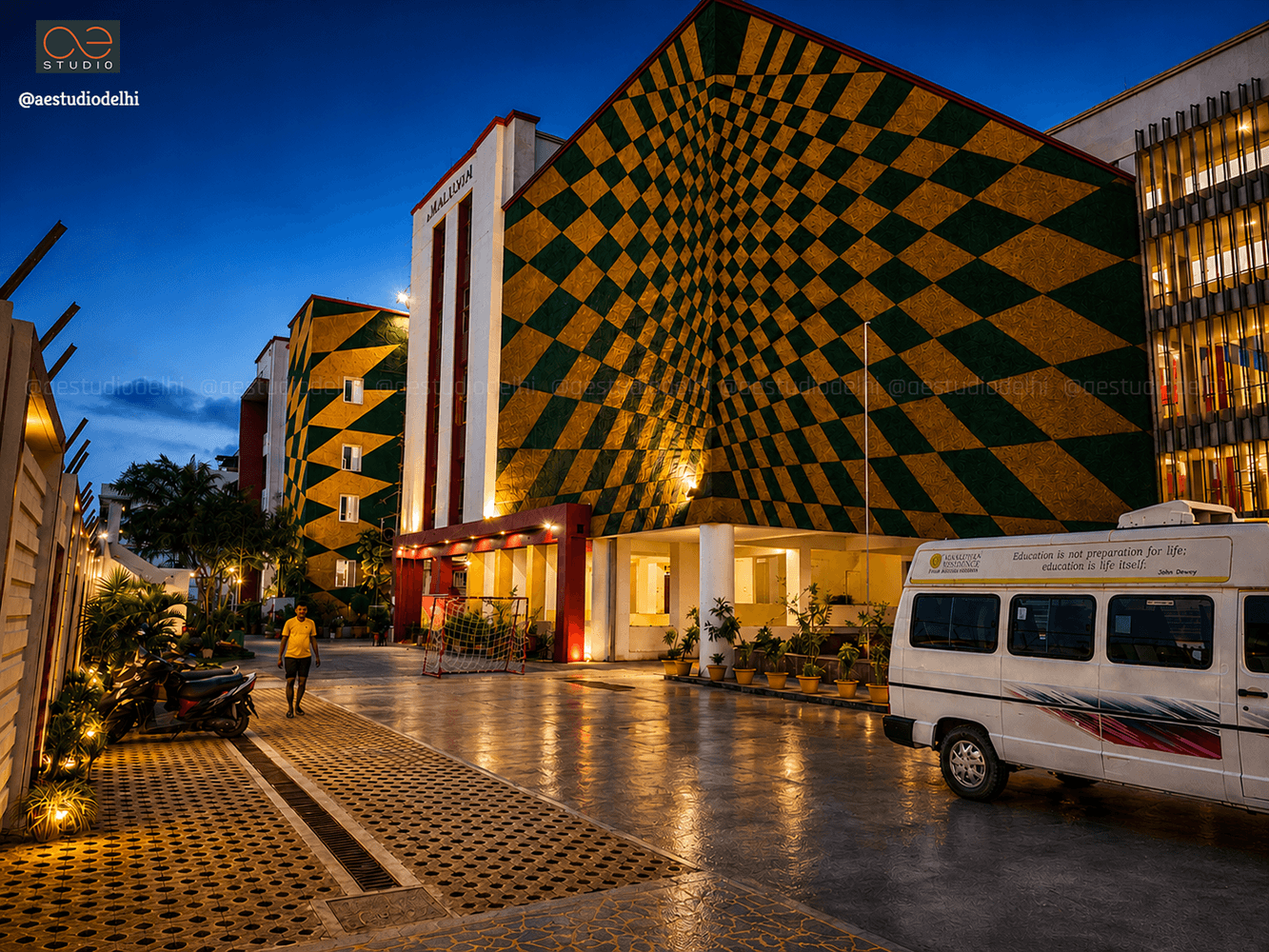
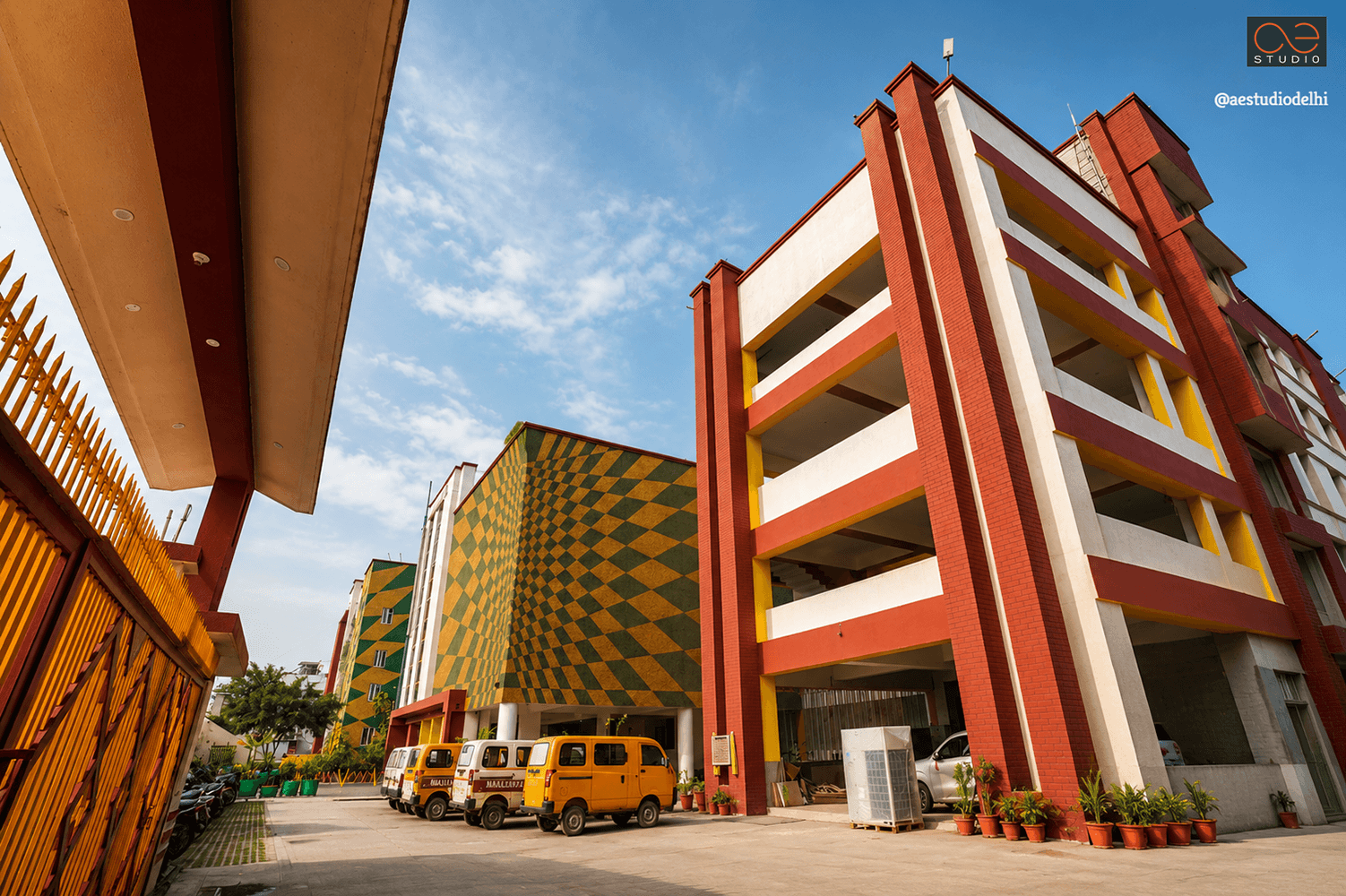
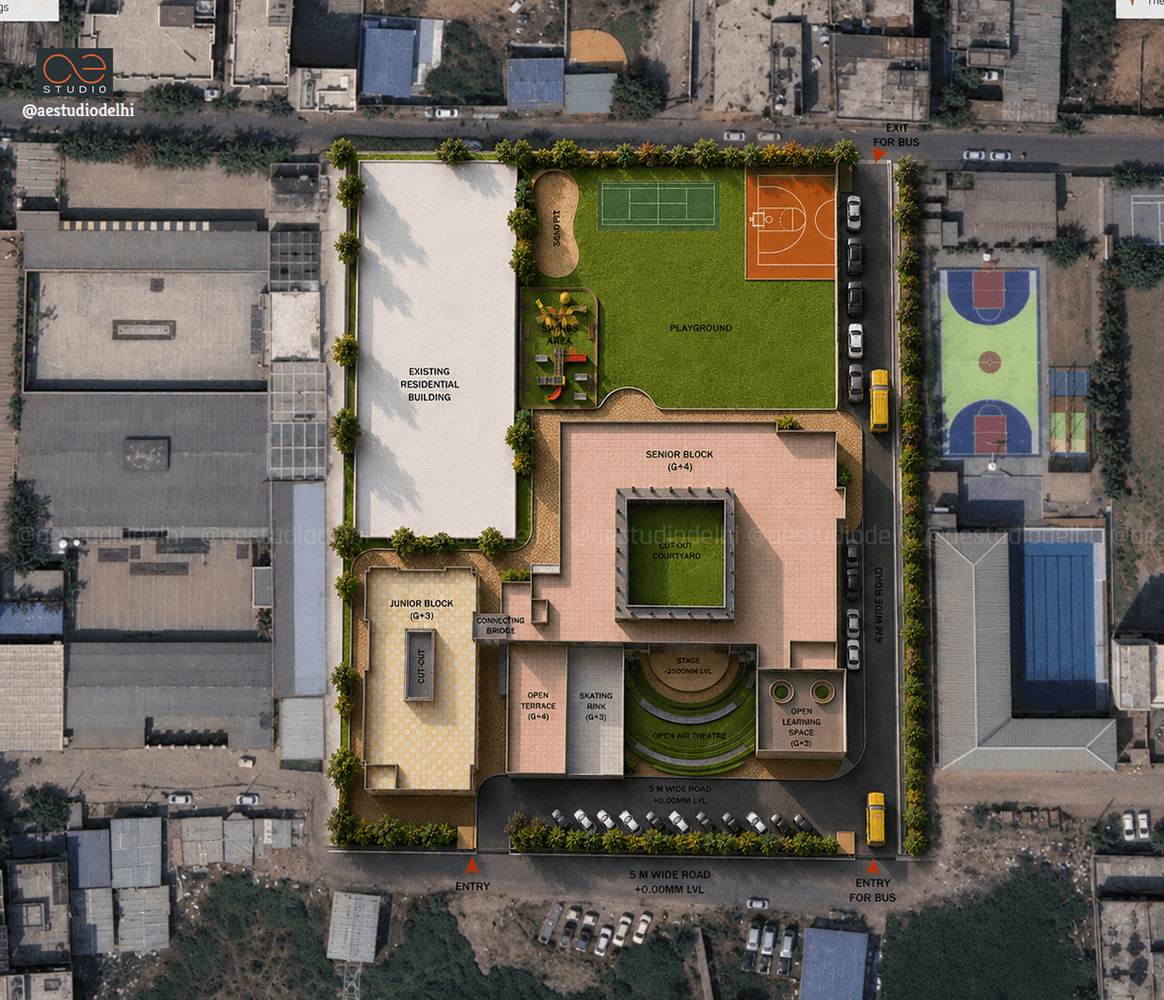
Located in Patna on a highly restricted urban site, The Maalinyai School is an intervention in micro-campus planning that redefines the contemporary learning environment within dense city conditions. Guided by a progressive vision for interactive learning, the design departs from conventional institutional layouts, utilizing an interlocking vertical master plan to create an engaging, highly connected student ecosystem.
The site is tight. The ambition is not.
Massing & Connectivity
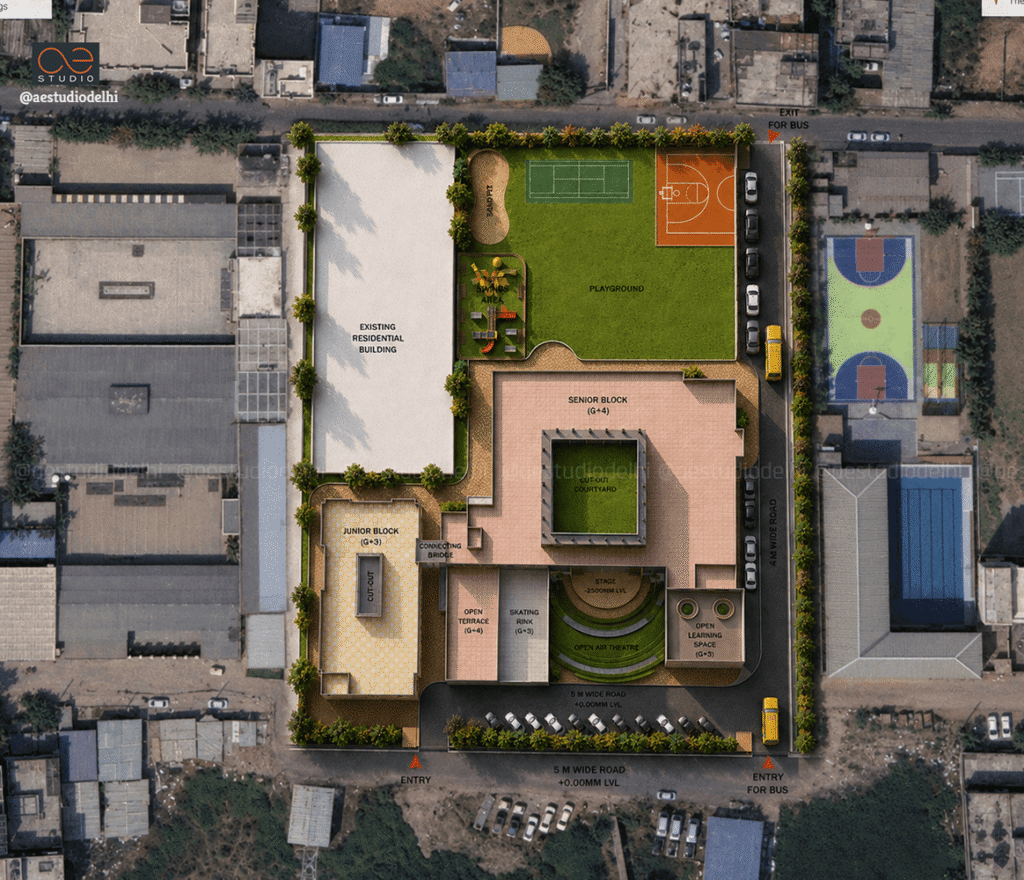
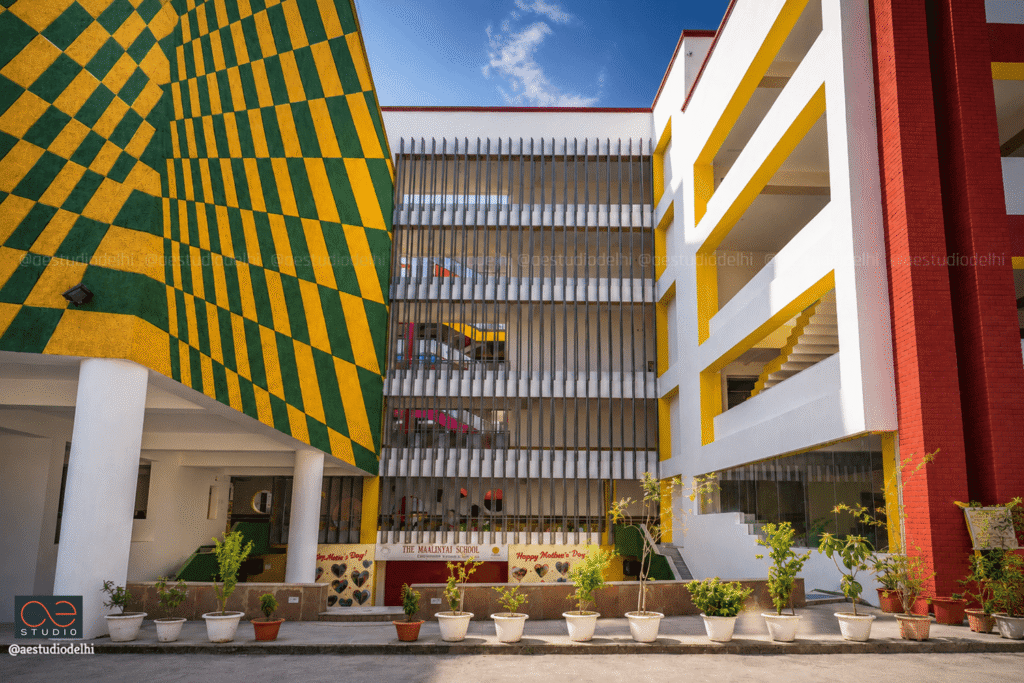
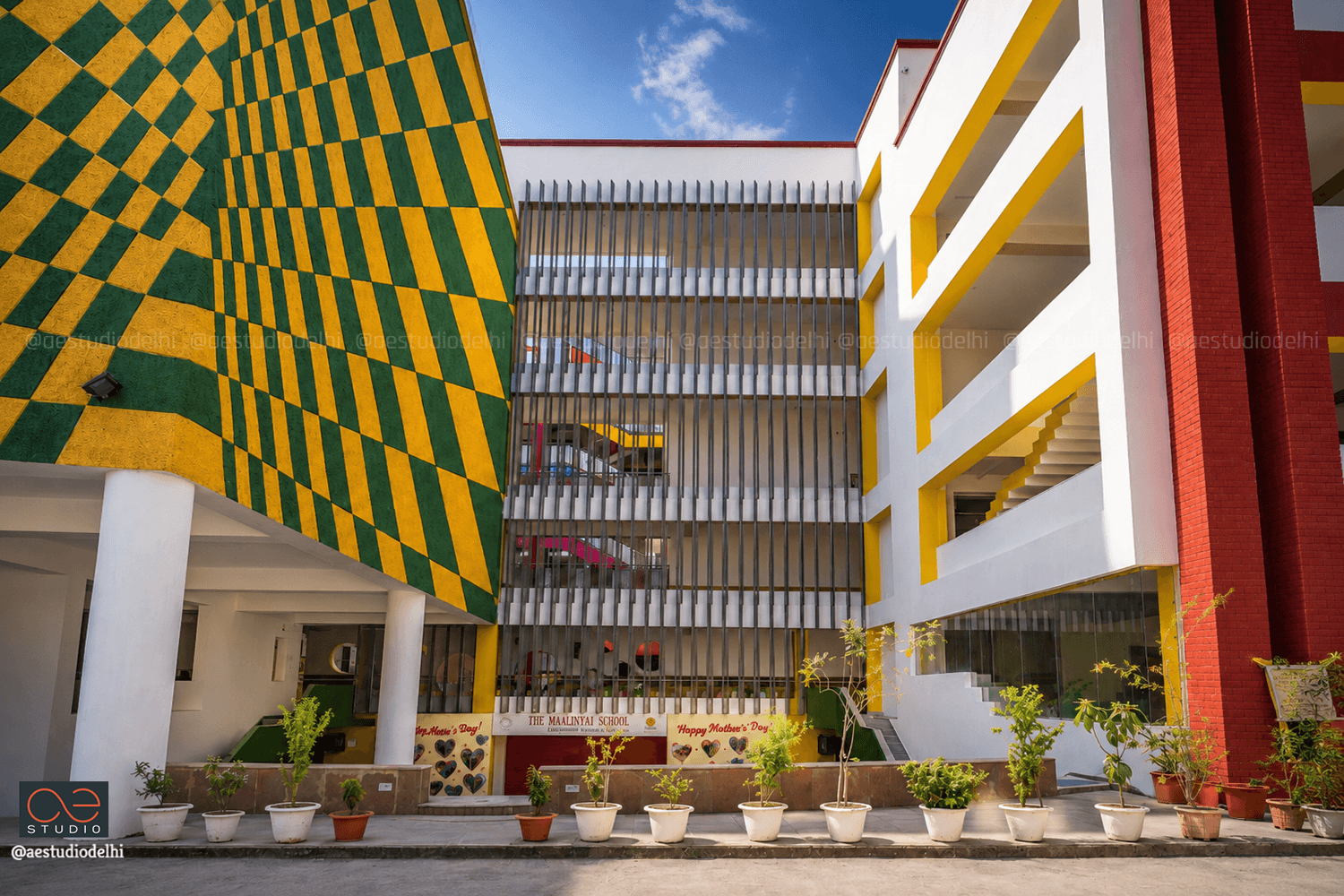
The master plan addresses severe spatial boundaries by strategically siloing and stacking core academic zones. The campus is divided into a Junior Block (G+3) and a Senior Block (G+4) , physically and visually linked by an elevated Connecting Bridge. This architectural link allows for strict age-group segregation while maintaining a unified pedestrian circulation network below.
To balance the built footprint, the northern sector of the site is preserved for consolidated recreational infrastructure — maximizing natural ground for a Playground, Basketball Court, Sand Pit, and Swings Area.
The Carved Voids: Courtyard & OAT
The primary spatial and climatic responses are driven by two large carved voids within the blocks.
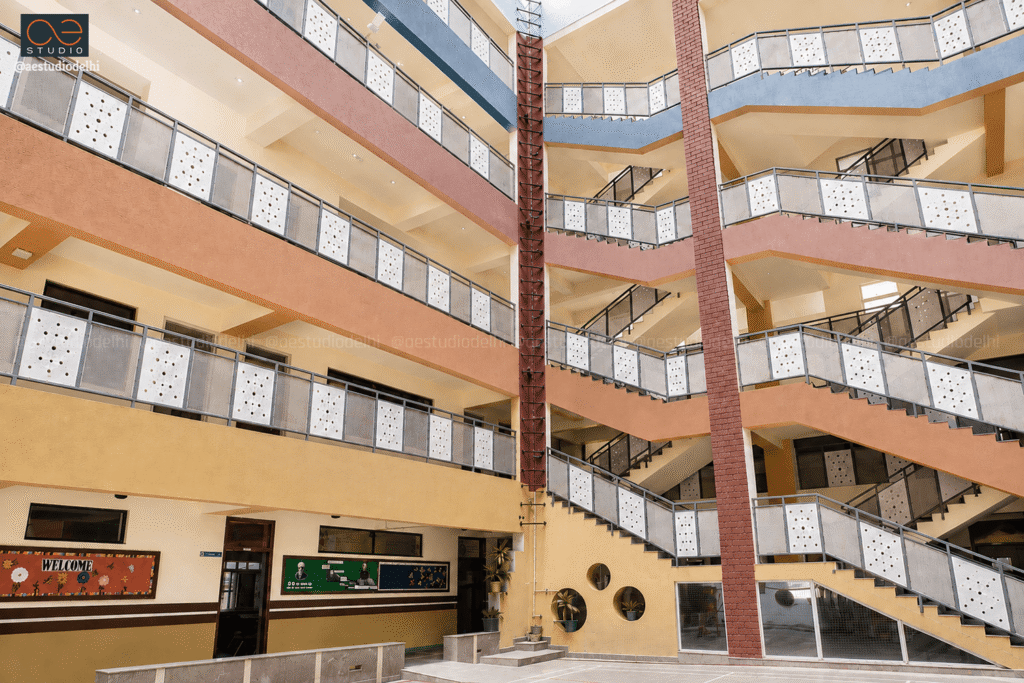
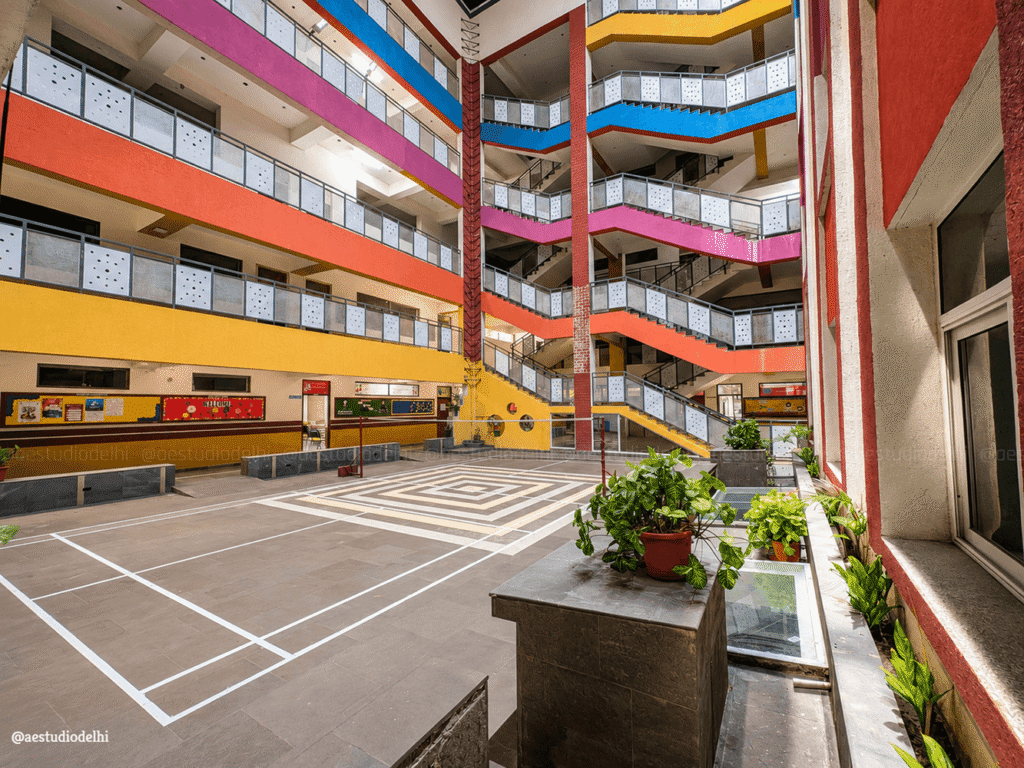
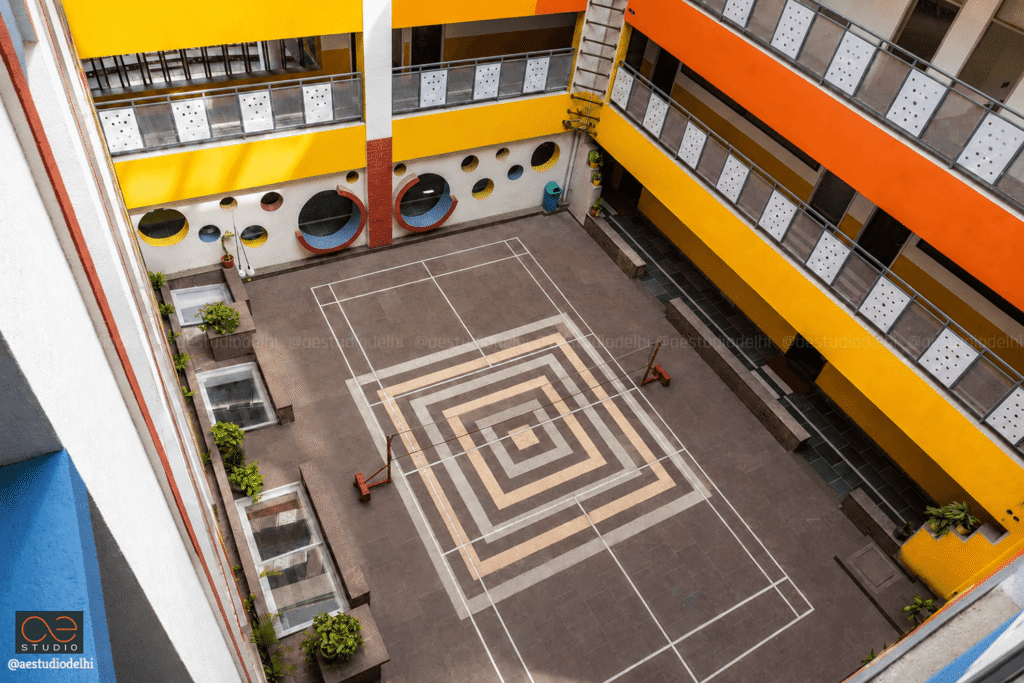
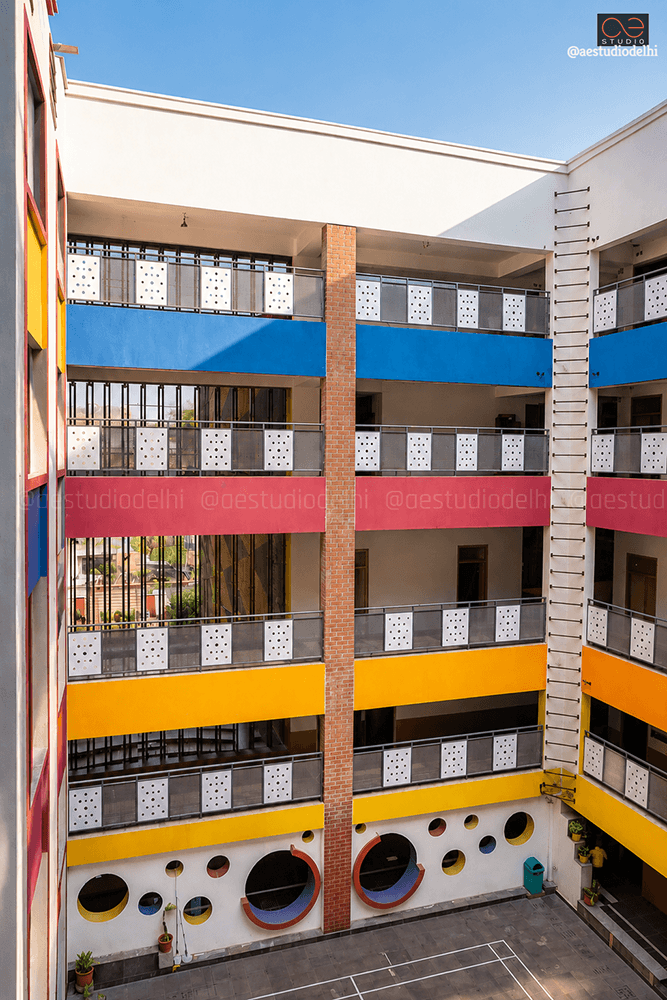
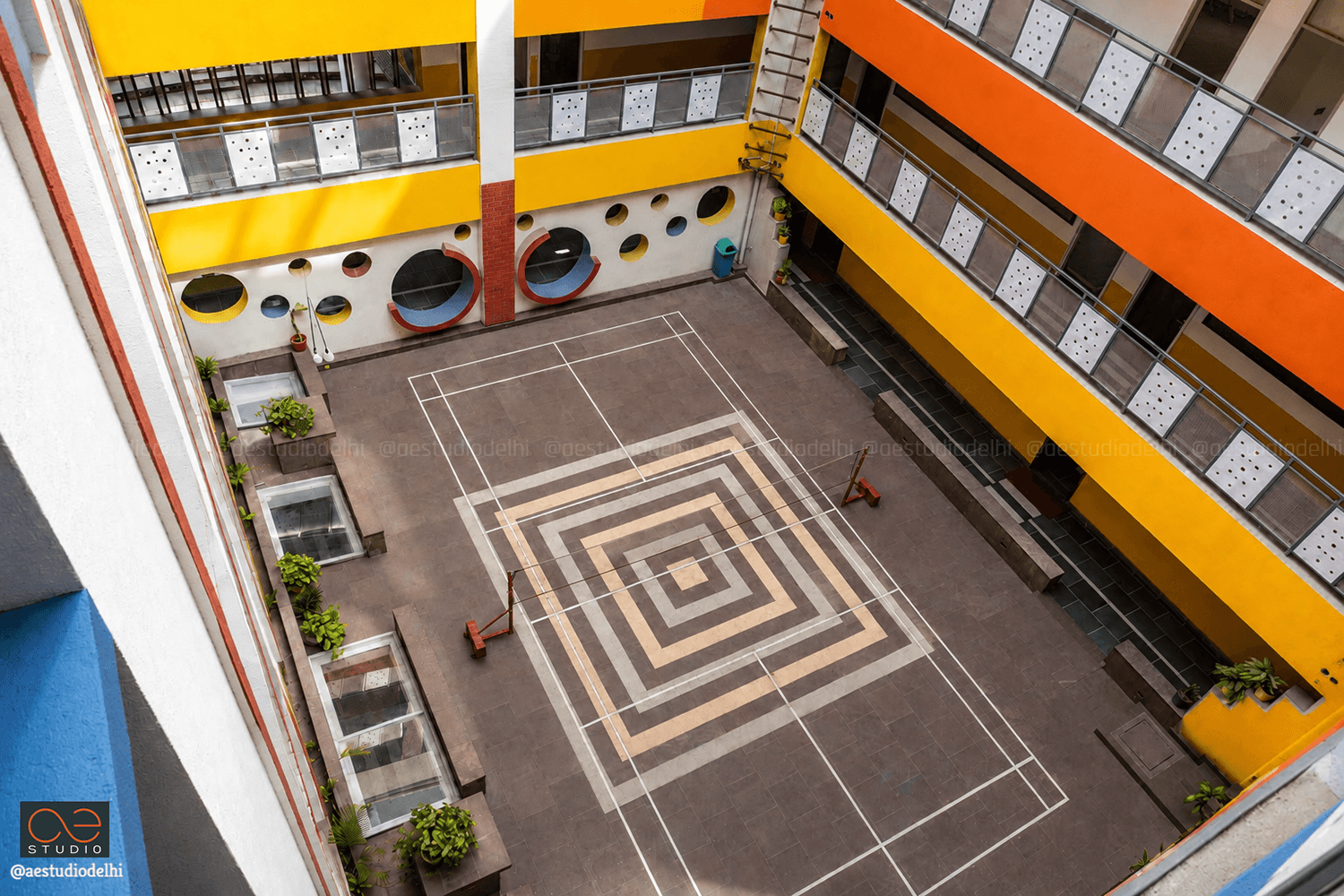
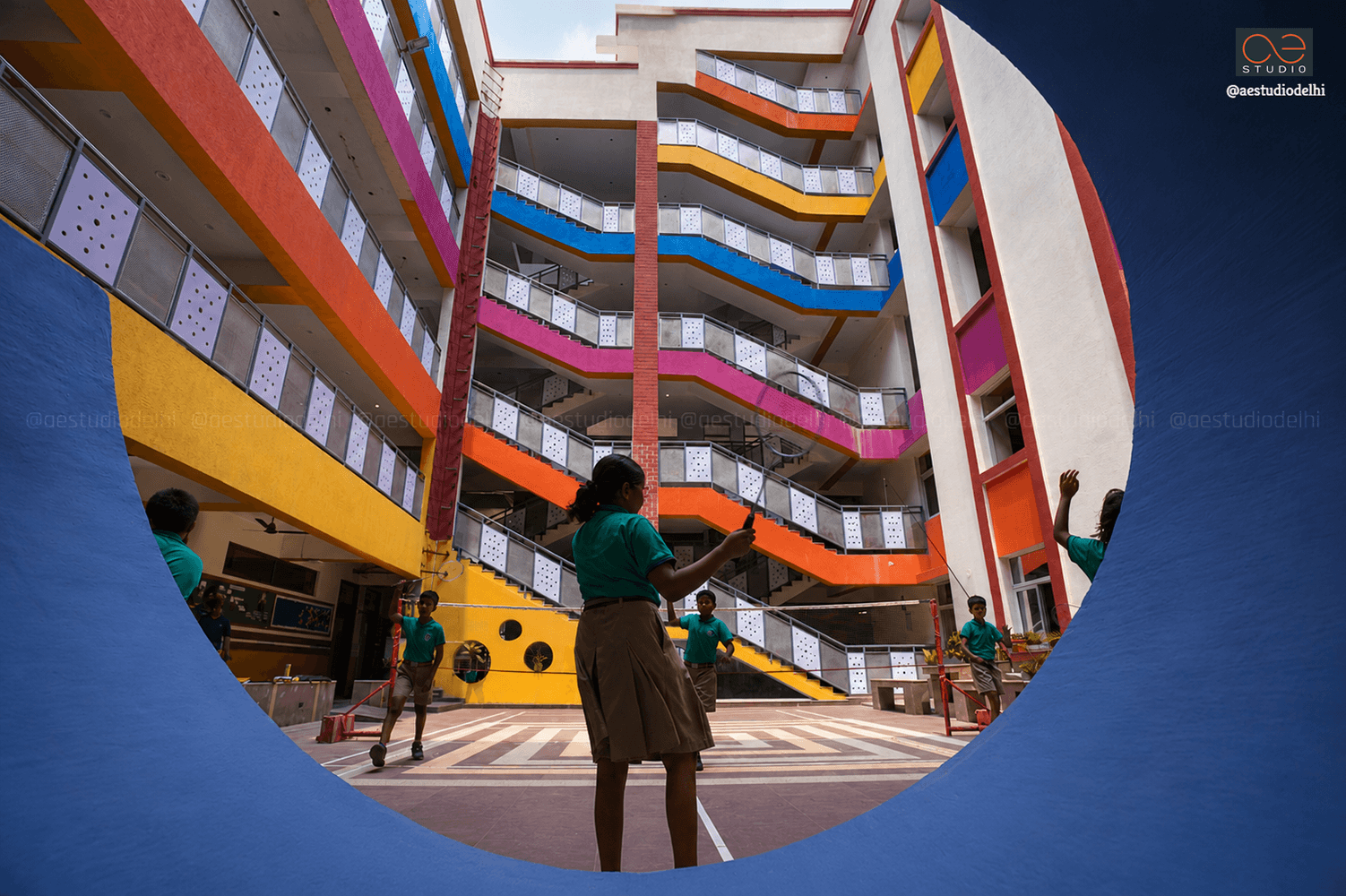
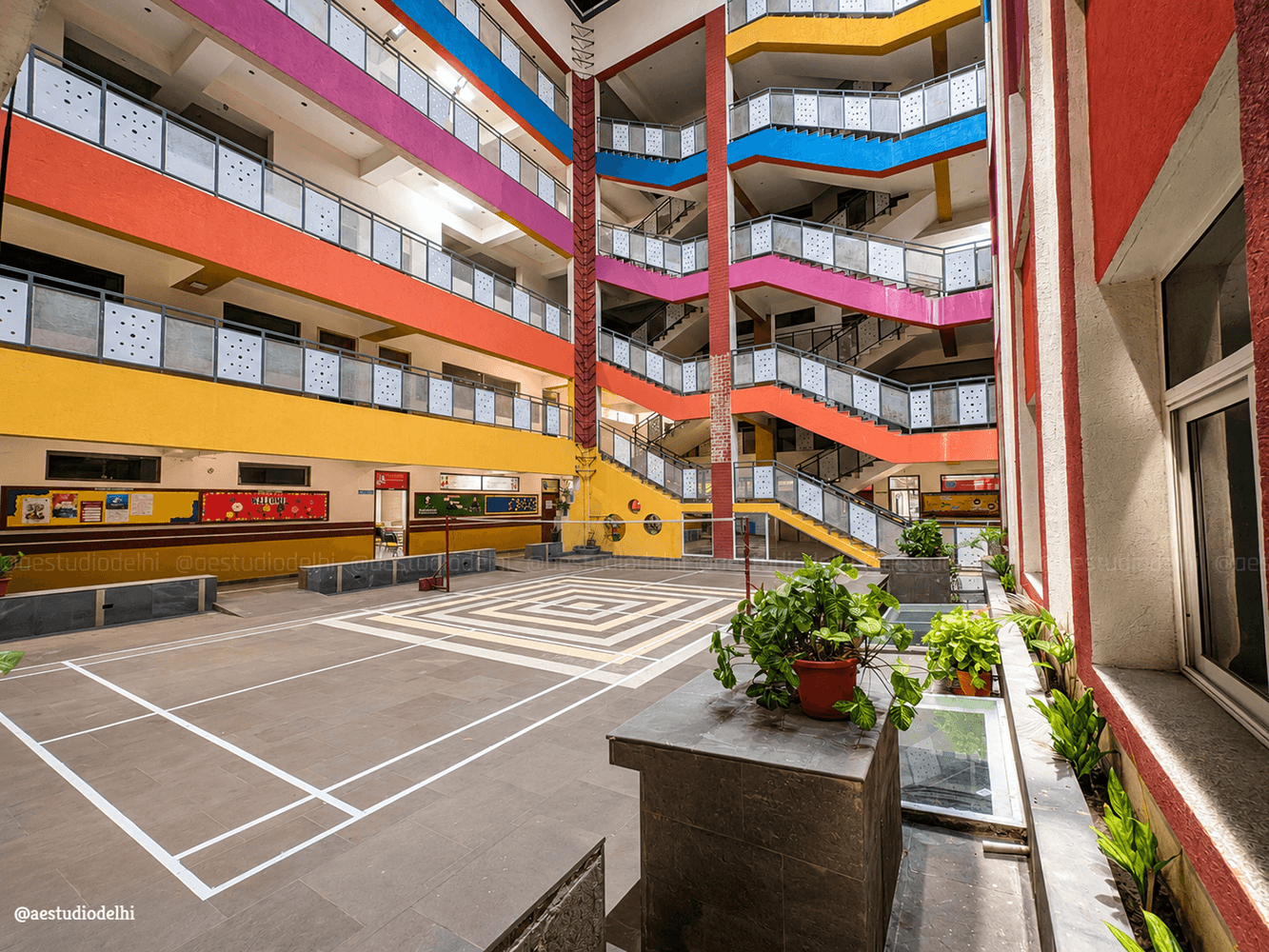
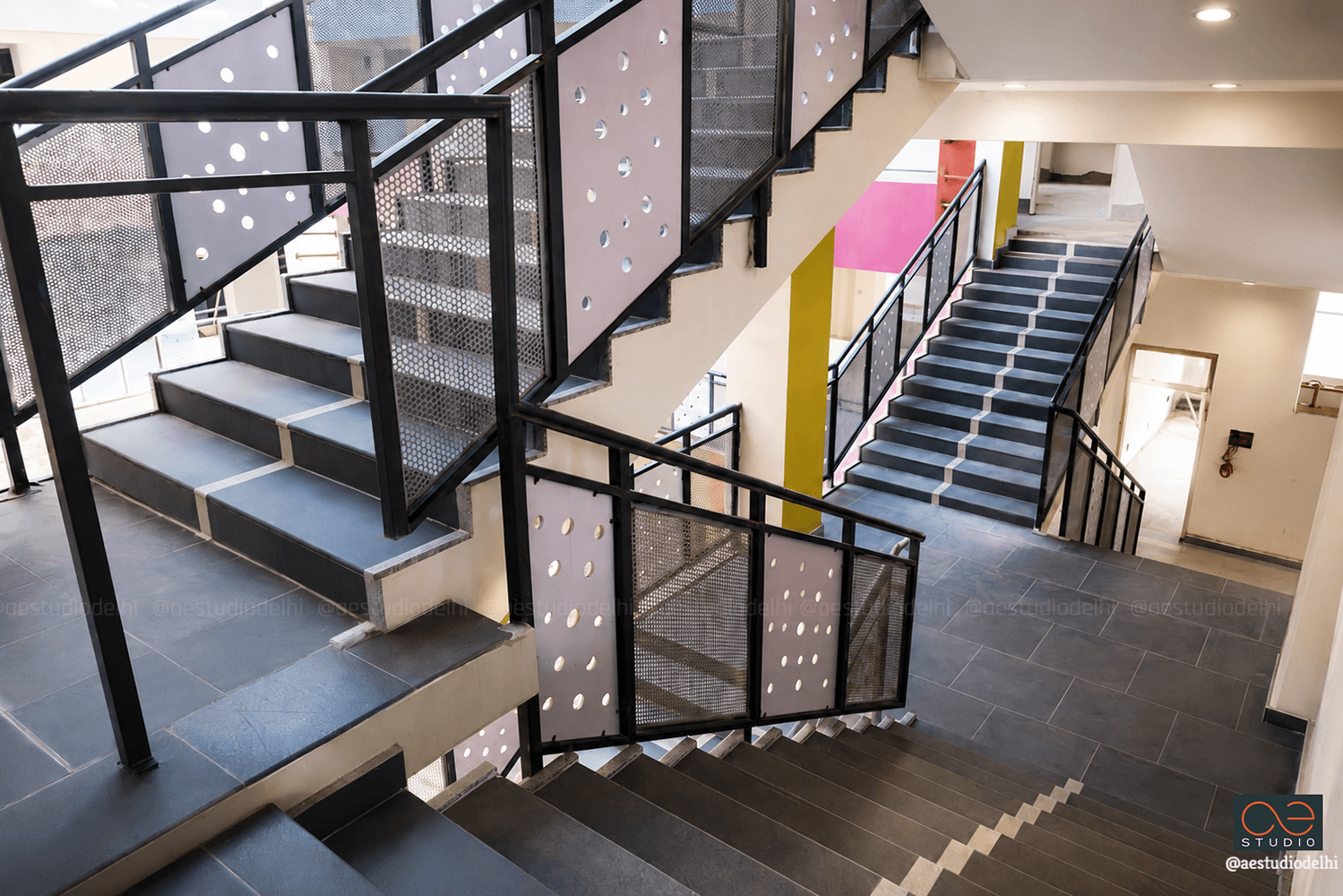
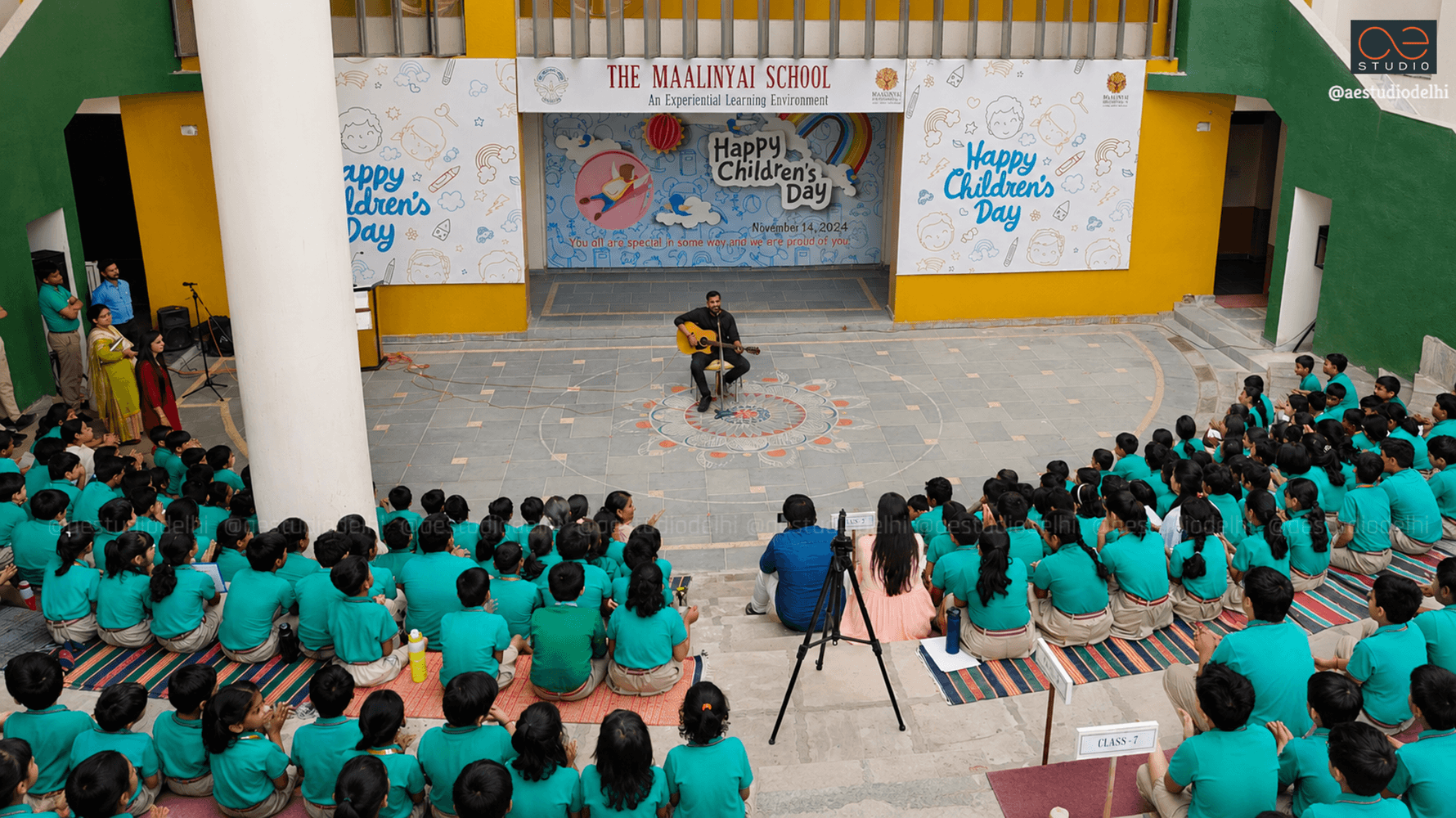
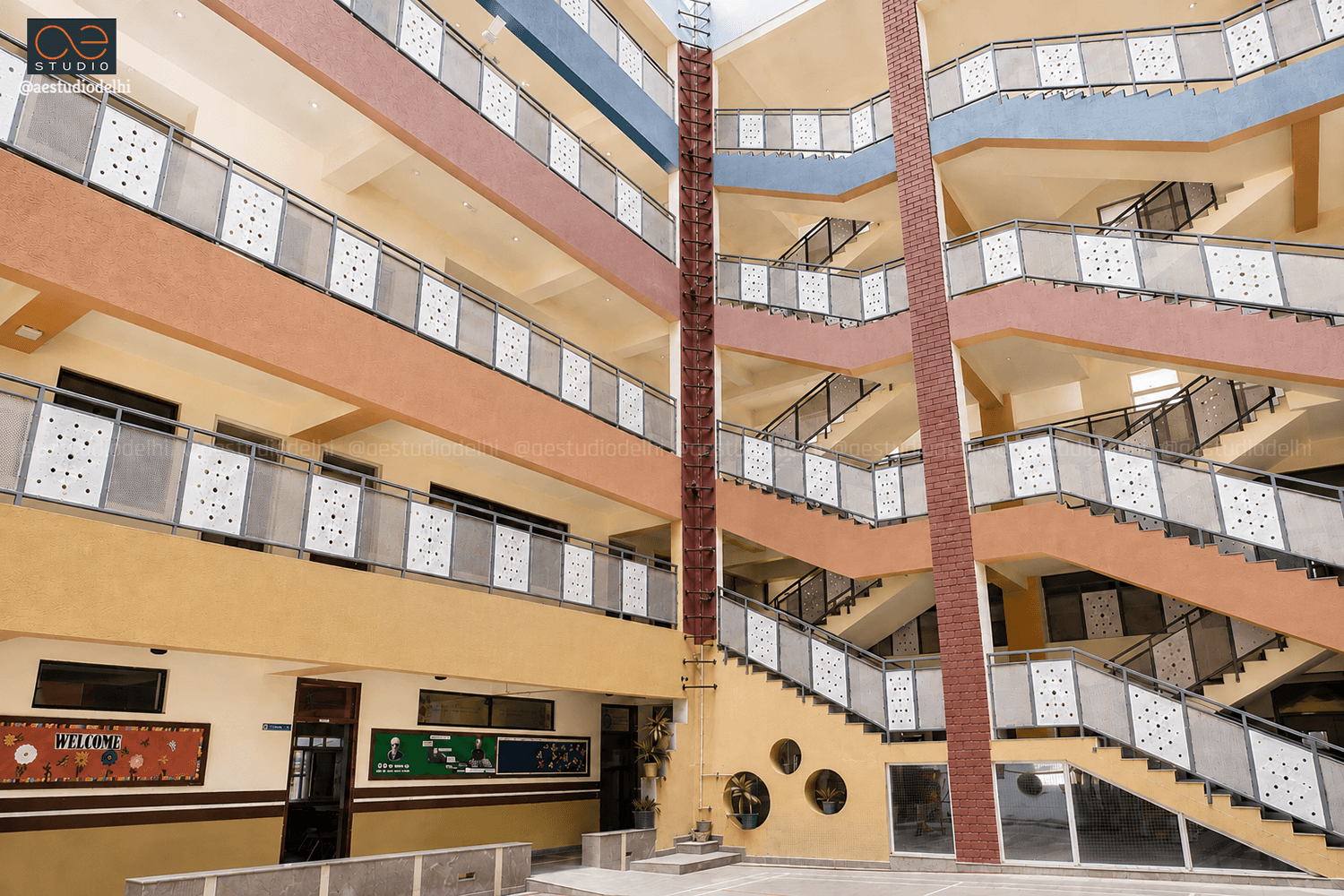
The Senior Block is organized around a large, central Cut-Out Courtyard — a shaded, breathing spatial anchor that improves daylight penetration and cross-ventilation in Patna's intense climate. The courtyard:
• Improves ventilation across the campus.
• Enhances daylight penetration into surrounding spaces.
• Provides thermal comfort in a challenging climate.
• Functions as a multi-use interaction space for recreation, events, and visual connectivity across different parts of the school.
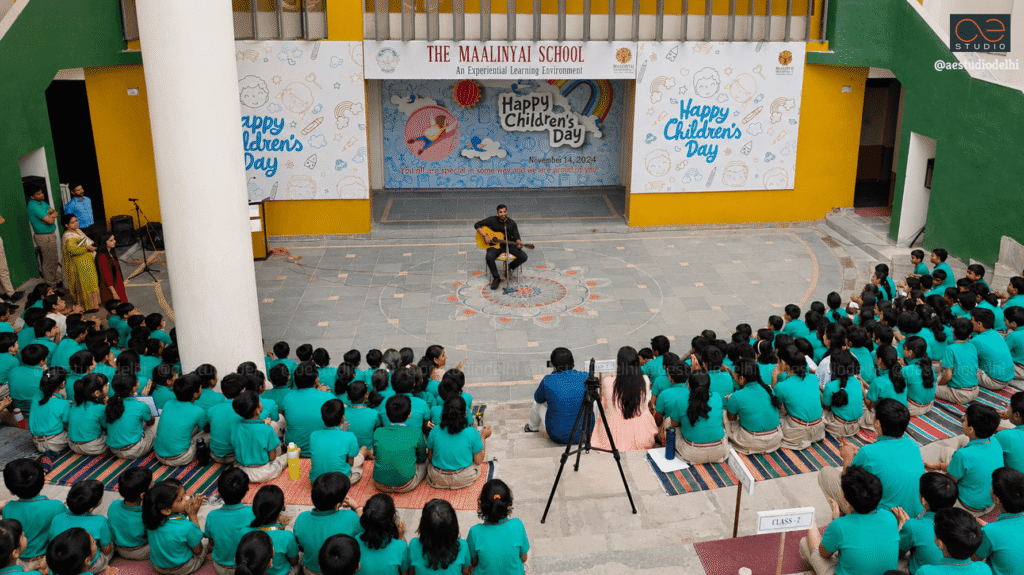
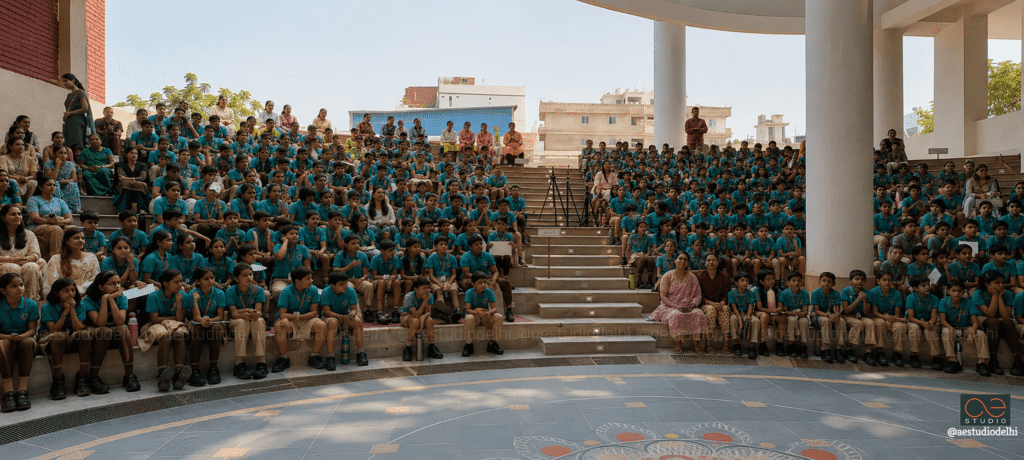
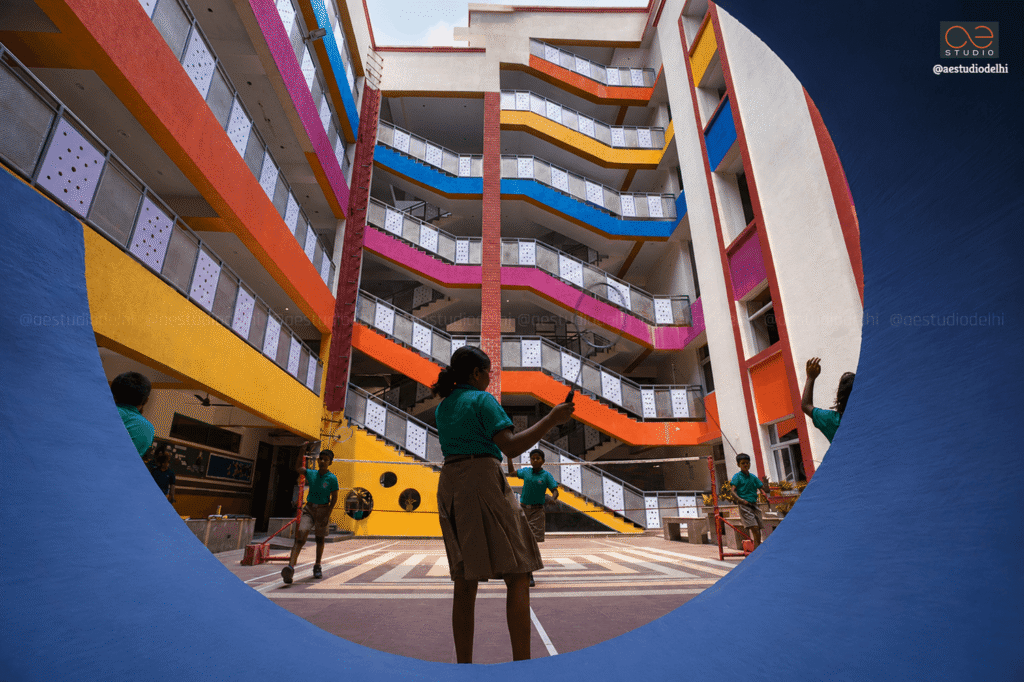
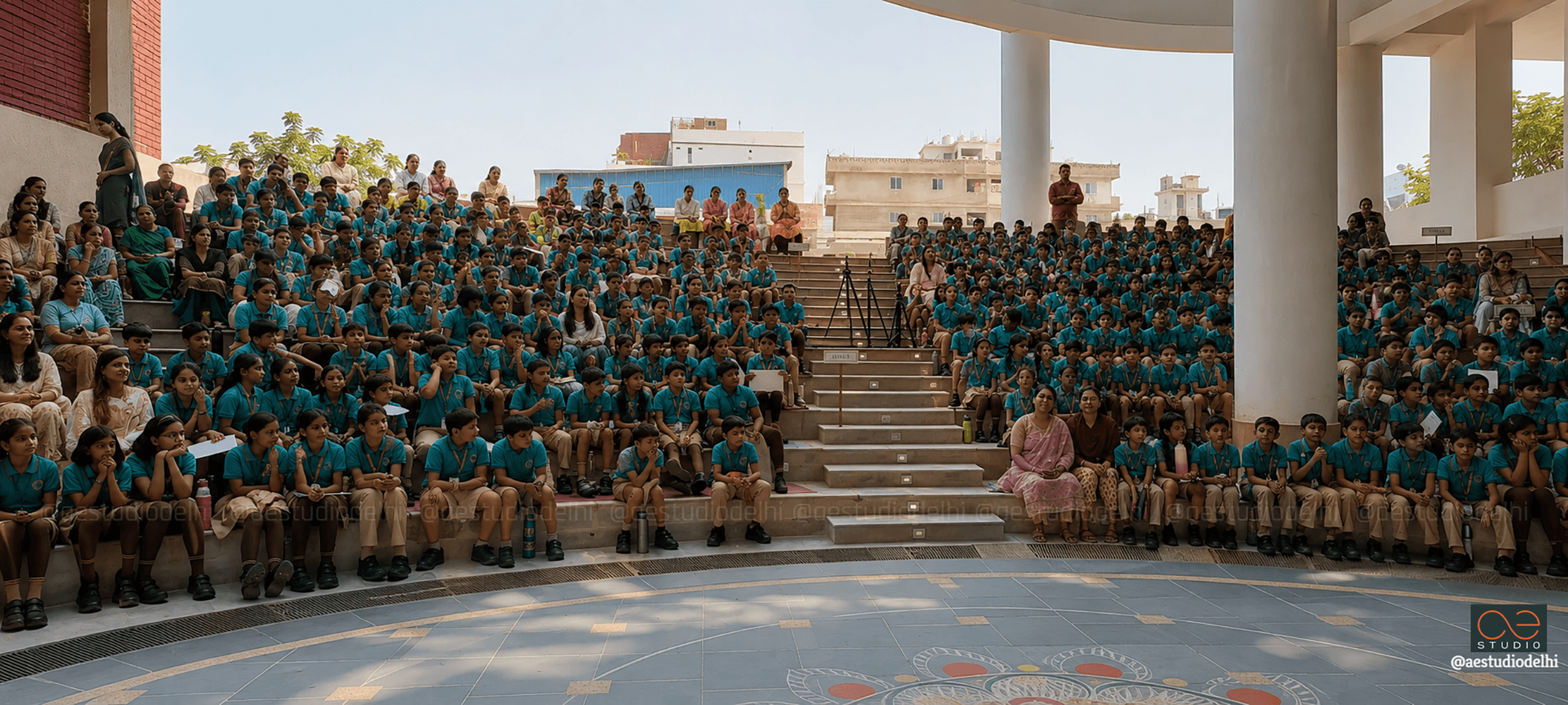
Directly interacting with this grid is a semicircular Open-Air Theatre (OAT) embedded into the building plan itself. Partially shaded by an overhead building overhang and featuring a subterranean stage level (-2800mm LVL) , this stepped configuration seamlessly transforms from a cultural gathering heart into a casual everyday spill-out space.
The stepped OAT creates opportunities for:
• Assemblies
• Performances
• Informal gatherings
• Everyday student interaction
It brings energy and identity to the institution. It is not an amenity. It is the center.
Spill-Out Spaces & Circulation
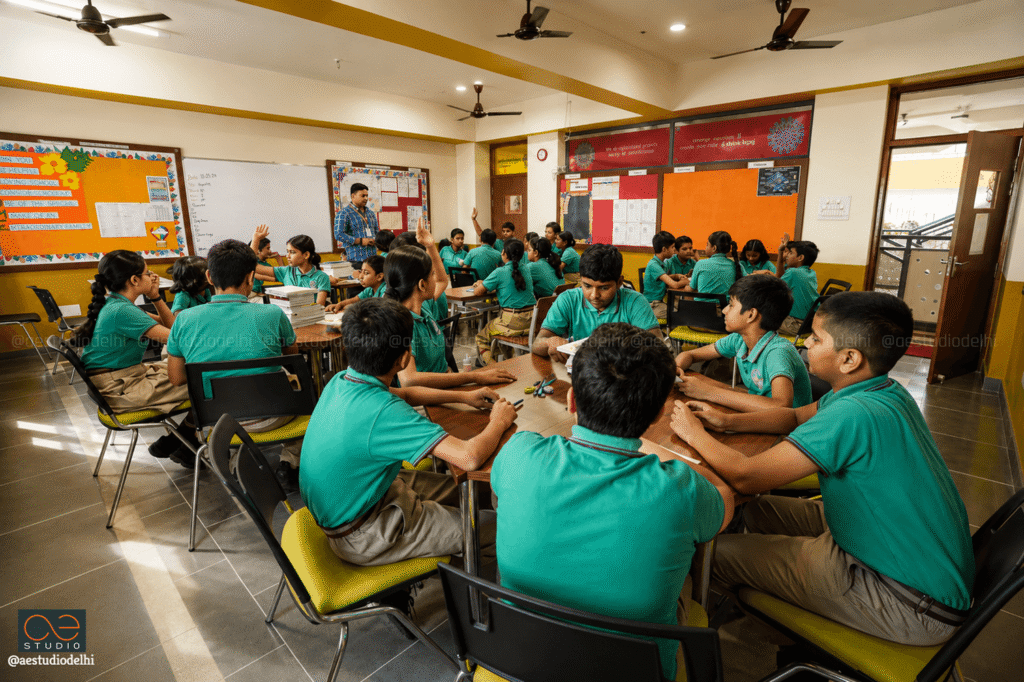
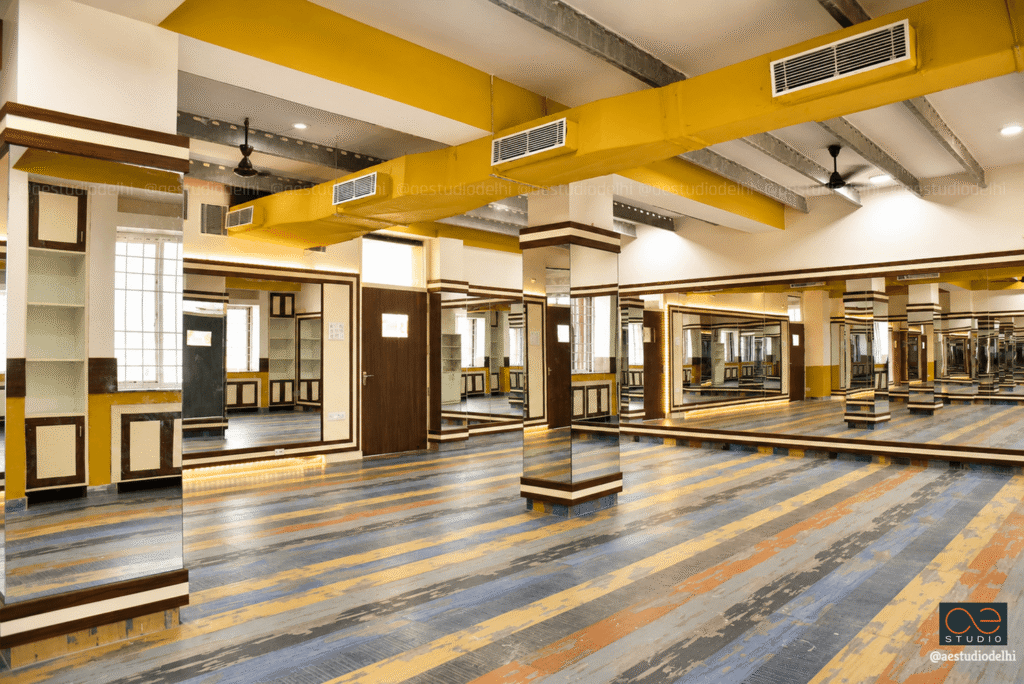
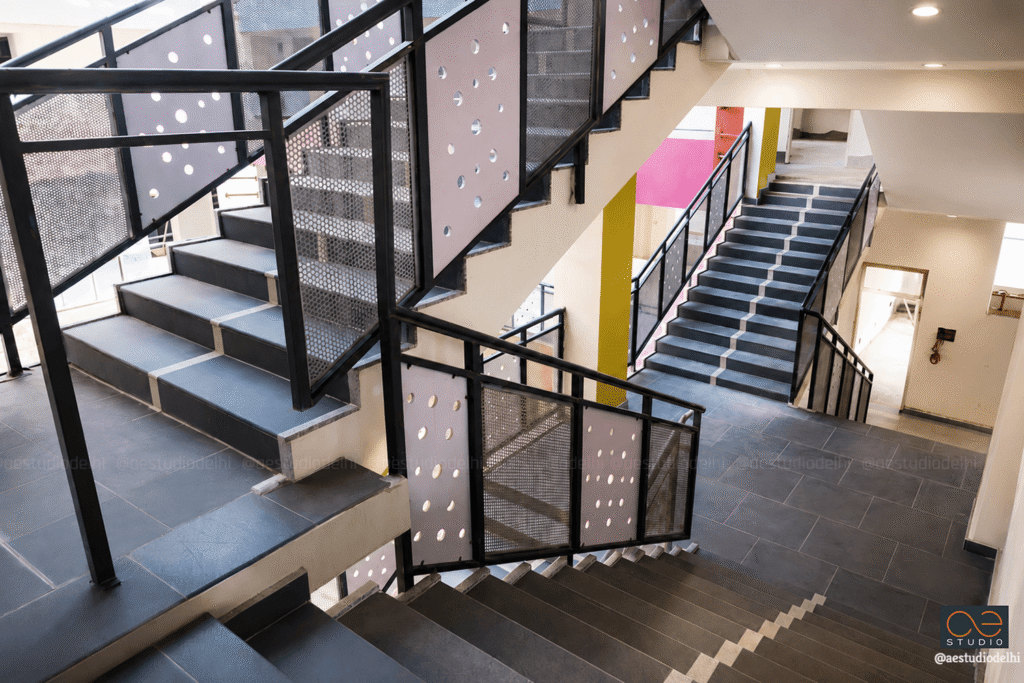
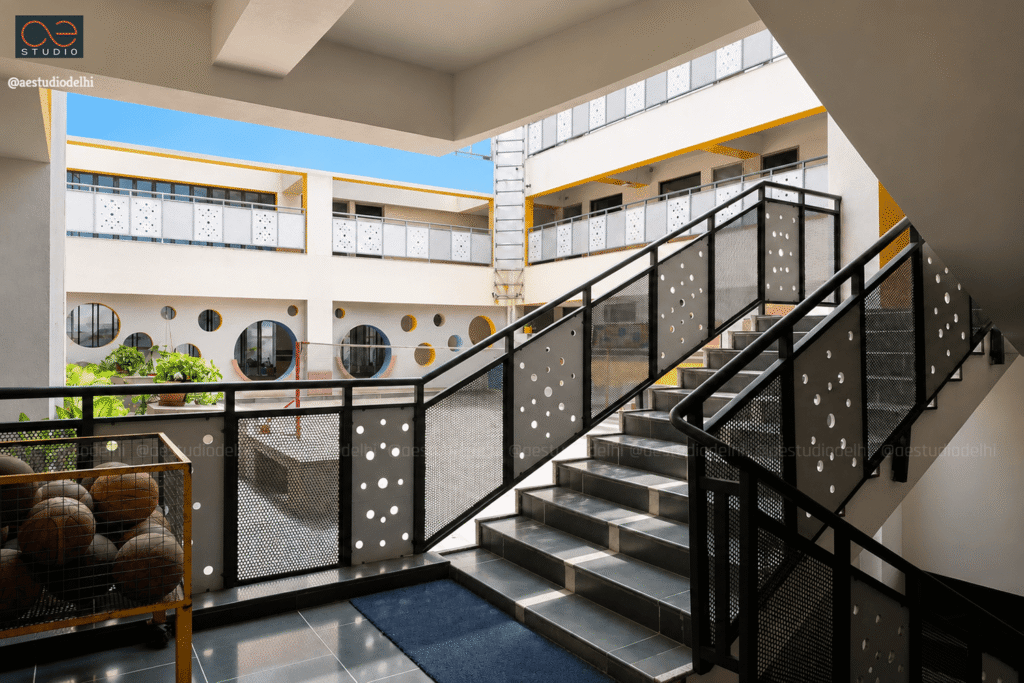
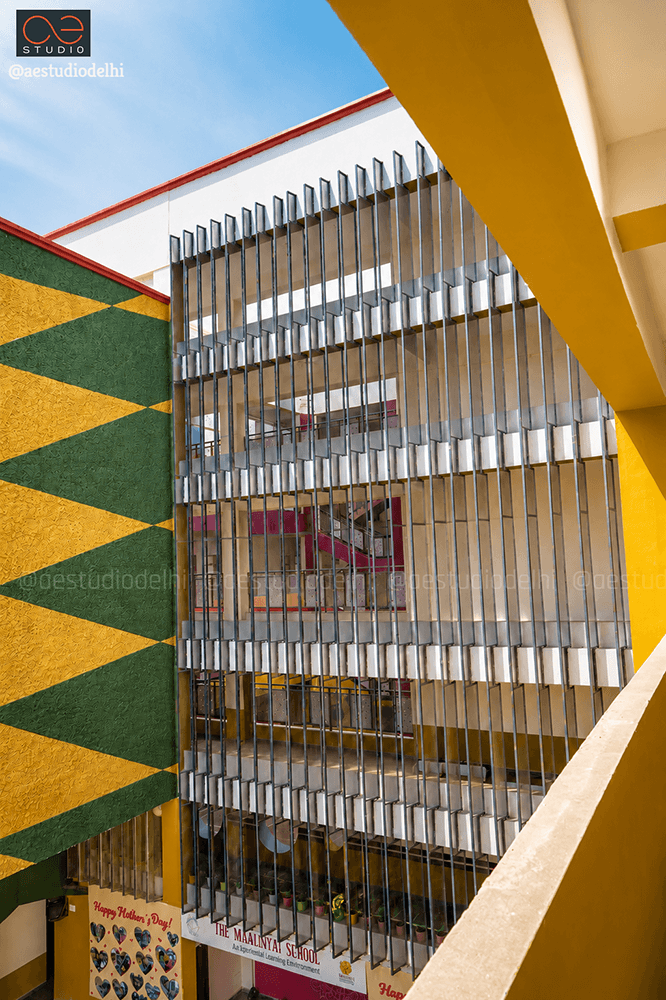
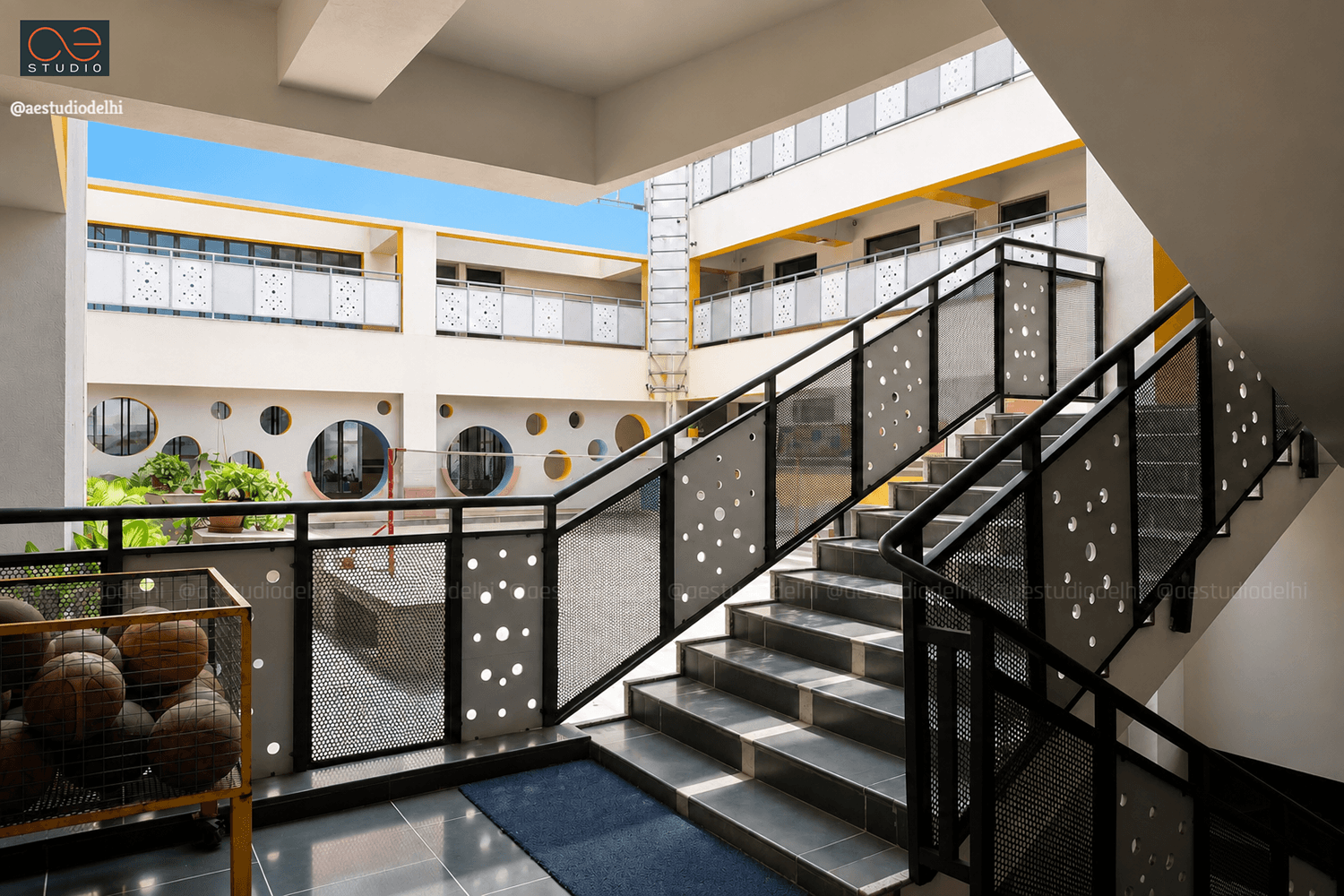
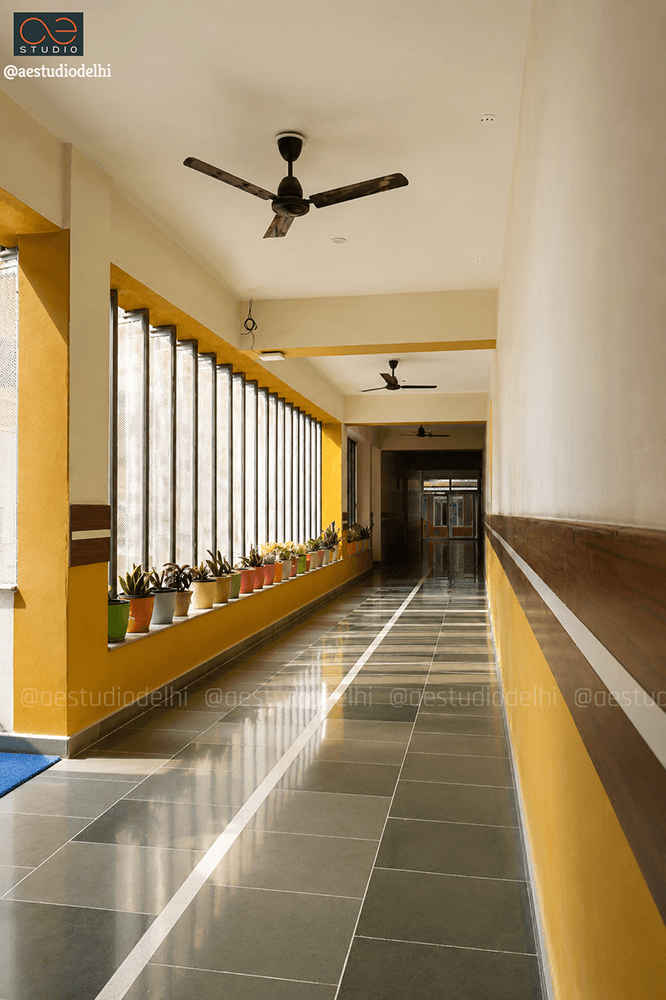
Wide, protected corridors flank these voids, transforming transit areas into collaborative hubs. Bridge-like connections, spill-out spaces, and open learning environments further strengthen the architectural intent — creating a campus that encourages collaboration, creativity, and holistic development.
The building does not confine. It releases.
Pedestrian-First Planning
A peripheral 5m vehicular corridor with distinct entry and bus loops ensures a 100% pedestrian-safe inner core. Cars have their place. Children have theirs. The two do not mix.
The Unifying Idea
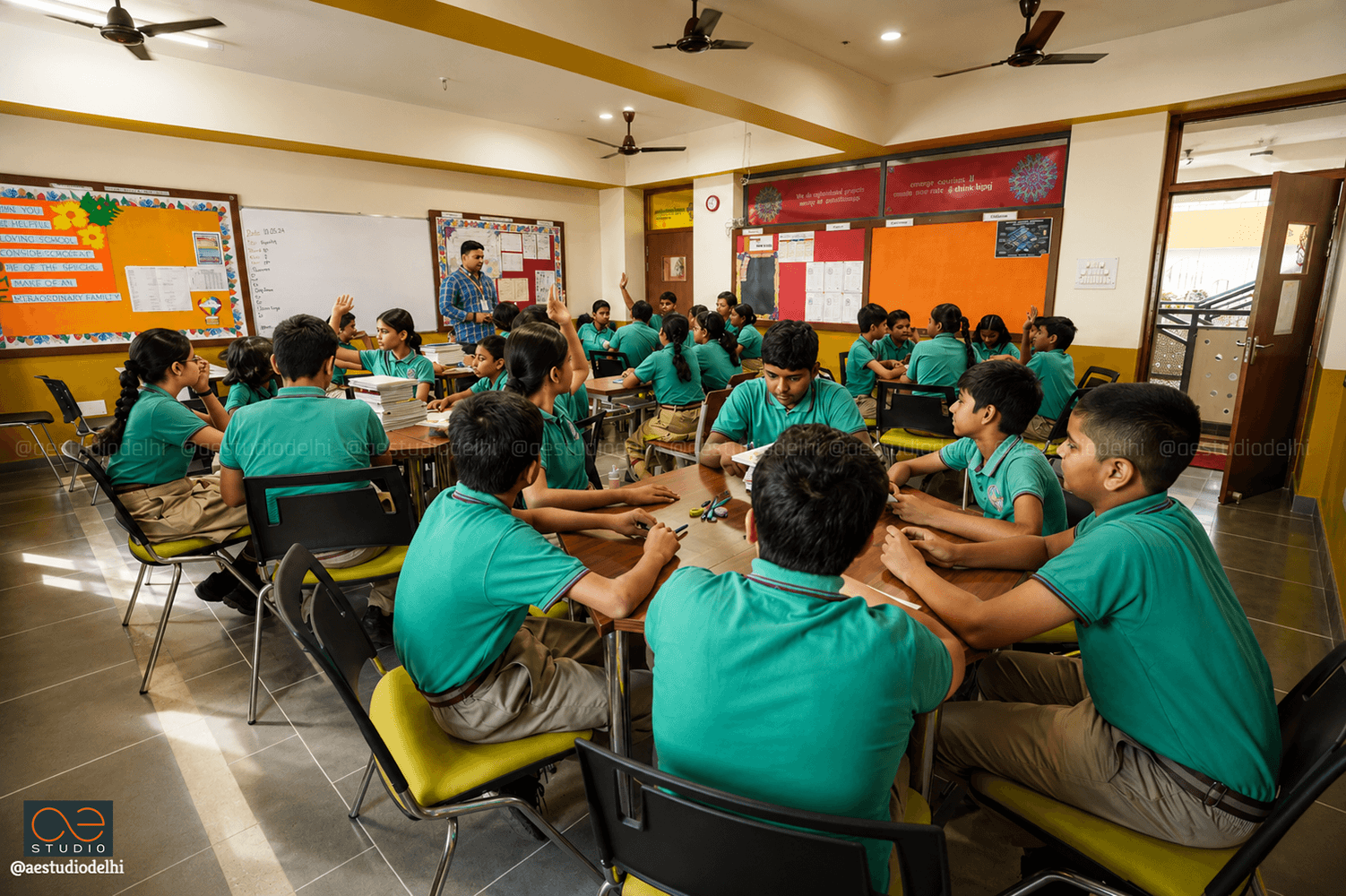
The Maalinyai School is more than an educational building. It is a dynamic learning ecosystem — where architecture, landscape, and community spaces come together to inspire young minds.
A dense site, made generous through vertical stacking and carved voids. A cut-out courtyard that cools and connects. An OAT with a subterranean stage, beating at the heart of the plan. Wide corridors that invite pause. Bridge-like links that spark curiosity. And a pedestrian-safe core where children move freely.
This is not just a school in Patna. It is a model for what progressive education can look like — anywhere.
“On a highly confined urban site like Patna, our goal was to replace the standard 'corridor-and-classroom' box with a dynamic, interlocking matrix. By carving deep cut-out courtyards and embedding the Open-Air Theatre directly into the building's geometry, we have tried to create an architecture of transparency. The buildings step back to let light, air, and student interaction become the true infrastructure of the campus.”
- SANDEEP R TANDON